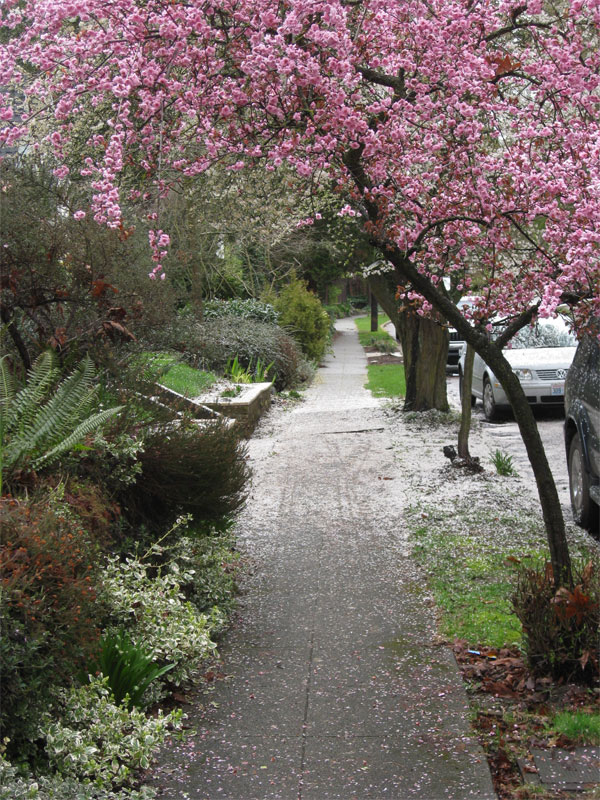
Spring Snow
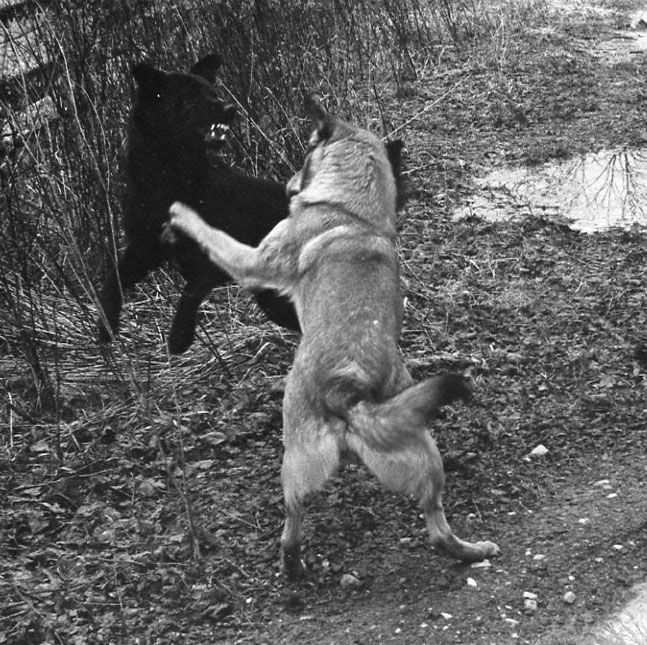
Beasts: how we love them. Love to fear them. Love to hate them. Love to hunt them. Love to tell tales about them.
Since before the dawn of printed words, stories of wild animals whose actions blur the line between species have fascinated humans. To talk to the animals, to know what they think and feel, remains a subject of vivid interest. And of all animals, dogs have shown the greatest ability, and desire, to bond with humans, to serve, follow, and work for them. But . . . inside every dog, from the tiniest Chihuahua to the burliest mastiff, lurks genetic memory code of its ancestry — the wolf. Not exactly man’s best friend.
The romance of this idea has been exploited for centuries. And while modern teenagers may think, judging by some of the gushing postings on the web, that werewolves were reinvented solely by the author of the “Twilight” series, the truth is more complicated. The concept of the man/wolf, or the beast within us all, has been the subject and/or inspiration of many imaginative works, both literary and cinematic. When the “Twilight” generation were still wearing Pampers, Jack Nicholson astounded audiences in 1994 with his riveting portrayal in “Wolf.” One of the things that made Nicholson’s performance so impressive was that his convincing transformation from man to wolf was produced without the aid of digital enhancements or fake fur. It was all in the eyes, the attitude, the snarl.
Last week Benicio Del Toro joined the ranks of fine actors who have taken a walk on the wolf side in the new film, “The Wolfman.” It’s a grittier rendition than, say, Hugh Jackman’s pimped-out Wolverine character in the X-Men movies. But that’s part of what makes the genre entertaining. In literature and film, you really can teach a dog new tricks.
In Toby Barlow’s brilliant 2007 debut novel “Sharp Teeth” the myth of the lycanthrope is given a terrific noir spin. Set in modern LA, with a cast of characters that include a down on his luck dogcatcher, some female werewolves with sharp teeth of their own, and some competitive bridge players with more than cards up their sleeves, the story deals with issues of loyalty, justice, compassion and community without ever slipping into sentimentality. And, did I mention the entire thing is written in blank verse? I know. I wasn’t sure I was going to be able to hack it. But the clarity and occasional poetic power of the language, the nimble pace, and the fine-edged tone of the whole is such that you forget about the form and get swept away by the wonder of a good story well told.
Allen Ginsberg would have loved it.
I talked to some relatives back East yesterday. They were chipping ice off the driveway, having icicle measuring contests (the unofficial winner: eight feet long), and trying to keep the kids from snowboarding off the roof.
I did my best not to gloat. I didn’t tell them about the camellias blooming at my doorstep. Or the primroses lighting up gardens all over town. Or the fact that Seattle just went in the record books for the warmest January in more than a hundred years.
I feel that Seattle has earned the respite. The first year we moved here the city was slogging through a stretch of record rain that made national news (forty days-plus without the ark). The next winter a series of windstorms, ice events and floods started me wondering if we’d been sold a bill of goods by the folks who had assured us Seattle’s winters were uniformly mild. The third winter a foot of snow paralyzed the city for more than a week. People were stranded at Sea-Tac for days at Christmas. And of course the city doesn’t keep a fleet of snowplows handy because, I guess, they bought into the same myth of the mild winter.
So this year, I was braced for whatever – earthquake, mudslide, volcano eruption. But it seems this was the payoff year. Gentle temperatures. Daily sunbreaks. Sometimes whole sunny days! It’s been pretty great.
I feel for my friends back east. It’s never fun to be snowed in after the novelty wears off and the electricity and heat go off as well. I know from personal experience that shoveling driveways builds character. But once that character is built, it can be a bit of a trial to have to keep rebuilding it every time the clouds roll in and dump another foot or two of snow.
Here in Seattle the average annual rainfall is 37 inches. That’s less than Virginia’s average of 45 inches, or Florida’s average of 54 inches. What makes Seattle different is that instead of summer thundershowers which dump an inch or two at a time, Seattle gets a steady, drizzling mist over an eight month period from October to May. It takes some getting used to. But considering some of the alternatives, there’s a lot to be said for gentle rain.
In “The Good Rain,” Timothy Egan’s remarkable history of the Pacific Northwest, he credits the unusual climate of this region for shaping its history. In modern times we like to think we are immune to climate. Insulated by air conditioning, heating, and increasingly elaborate water management techniques, we act as if we no longer need to consider the realities of geography. And this recent spate of blizzards has all the climate change skeptics fired up anew, claiming a few days of record snowfall is sufficient to overturn decades of slow and careful scientific data gathered worldwide.
Our human perspective is so limited. Many centuries ago, ancient cultures thought weather gods could be appeased by sacrifices. In our own time, the force of hurricanes, snowstorms and typhoons appears to be escalating. Whether or not global warming is responsible for the planet’s wild mood swings, it looks like we could be in for a rough ride in the coming centuries.
But if I have to choose between a snow shovel and an umbrella, I’ll take the umbrella.
I have succumbed to “Caprica.”
I didn’t even put up a fight. As a former fan of “Battlestar Galatica,” the smashing Sci-Fi Channel series which set pulses racing with its taiko drums and noir attitude, I didn’t stumble unwittingly upon “Caprica.” I saw the slick ads in The New Yorker. I allowed myself to hope that the show might measure up.
And, so far, it’s not bad. The writers have a lot of compelling themes to work with – the uneasy alliance between artificial intelligence and humanity, the contested zone between religion and science, the limits of love and friendship in a world gone mad. The show is stylish, layered, and occasionally has the foreshadowing of those addictive drums.
But last night for the first time I heard one of the characters use the word “frack” as a verb to suggest—well, what we all assumed it meant in BG—a word that can’t be uttered on major networks. And it sounded natural in the fictional context. However, my own understanding of the word has irrevocably changed since I came across a story on the news wires earlier this week. The story by Associated Press Writers Marc Levy and Vicki Smith dealt with a drilling technique that has been used since the 1990s to tap natural gas fields.
The technique is called hydraulic fracturing, or “fracking.” And all this time I had thought how clever the writers of Battlestar had been to get around the confinement of obscenity rules by inventing a brand new euphemism which had the virtues of being both explosive on the tongue and somehow suggestively smutty. Yet, it turns out, the drilling technique, which involves pumping millions of gallons of water, sand and chemicals into wells to fracture the shale where the gas is trapped, produces a salty, foul wastewater too loaded with chemicals to be restored by conventional sewage and drinking water treatment plants. Hmm. Maybe the term is more obscene than I thought.
Of course, we all want energy to run our TVs and video games, not to mention the robots who will be doing our dirty work in the glorious future. But if our energy experts don’t figure out a better way to manage the millions of gallons of polluted water that fracking leaves behind, at some point in the not too distant future we may find ourselves well and truly fracked.