|
|
March 5th, 2010
It’s been a week since the Olympics in Vancouver ended, but I still can’t get that anthem out of my head. It seemed like every time you turned around somebody on a podium was getting misty-eyed as they lustily sang along to “Oh Canada.”
Why don’t we have a song like that in our country?
I know, we have a national anthem. But wouldn’t it be cool if it were the sort of song normal people - not necessarily trained in light opera or gospel powerhouse - could sing?
Controversy over national anthems is nothing new, of course. Even in Canada apparently they’ve had long-running debates over the translation of their anthem (the original was in French - mon dieu!; and they also have an Inuktitut version). Here in the fractious United States there have always been champions of other anthem contenders such as “God Bless America” - the easiest to sing by far, “My Country T’is of Thee” - the first patriotic song many public school children learn, and my personal favorite, “America the Beautiful.” Over the years there have been nominations for a handful of other spirited songs - Woody Guthrie’s “This Land is Your Land,” and Bruce Springsteen’s “Born in the USA” among them. But in the land of the free-for-all and the home of the reckless, it’s pretty hard to get a consensus on anything, even something as seemingly innocuous as a song.
Yet the power of music to motivate and lift the spirit is undeniable, and for that reason the importance of a national anthem which the people of the nation can actually sing is not insignificant. During the Olympics we get a chance to hear the anthems of a variety of nations (or at least any of them who happened to be sharing the podium with an American, since our television coverage gives the impression that the only medals which count are those won by Americans - but that’s another rant).
I have to say that for the most part, the anthems of other nations don’t register with me. “La Marseillaise” is an exception, thanks in part to the unforgettable scene in “Casablanca” where Victor Laszlo leads the oppressed patrons of Rick’s Café Américain in a rousing rendition which drowns out the competing Nazi oppressors at another table. A minor victory, perhaps, but a telling one.
Which illustrates the problem with “The Star-Spangled Banner.” Suppose teams of singers were chosen at random from the spectators at a soccer game between the United States and France, and they had to compete in a simultaneous sing-off of national anthems. I think we all know what would happen. The US team would start off boldly, but the song wasn’t designed to be sung by average people. The melody swoops up, it swoops down, it almost never settles into a steady rhythm, and it ends with a killer high note. Thanks a lot, Francis Scott Key.
To its credit, TSSB is a stirring song. Like “La Marseillaise,” it’s a battle song, fit for football kick-offs and baseball diamonds. But, it ain’t hummable. Unlike that Canadian number. Man, there’s a catchy tune. Like a slow-moving train.
Here’s when it hit me. I was watching the men’s final of the curling event. Yeah, I know. I never thought it could happen to me, but you know how it is. You start by watching a few rounds, just for laughs, and then you realize that it’s a kind of prehistoric version of billiards crossed with shuffleboard, and it casts its own hypnotic spell. Plus there’s the pleasure to be had from any mystery, i.e., what the hell’s going on? The Canadian men were fighting for their first gold against a skilled Norwegian team who had generated a lot of media buzz due to their pants. That’s right. I said pants. When all about you are wearing sober black and you show up in harlequin red and gold, it gets noticed.
Anyway, things were rolling along in the sedate, some might say catatonic, way of the sport. A general air of civility and quiet was evident in spite of the growing excitement among the Canadian fans that they might actually make history. And then it happened. Sometime around the ninth end (a technical curling term), from the Canadian fans a soft sound grew as the familiar strains of “Oh Canada” rose on a fervent swell of national pride. This was unprecedented! Singing in the seats at a curling event? The players waited, bemused expressions on their faces, even the Norwegians, who by then could read the cursive on the wall, until the song ended, and a polite cheer went up.
This could never happen at, say, an American hockey match. And it’s not because we don’t all know the words to TSSB. It’s because the song wasn’t written for ordinary mortals to sing, not even ordinary mortals who’ve had a few beers and are feeling fairly invincible.
But “Oh, Canada” has the kind of easy-going, middle-of-the-road range that any child can sing. And it’s not about bombs bursting and rockets glaring. It’s about brotherhood and love of country. That’s all I want in a national anthem. At least until we can all agree on Bruce Springsteen.
February 27th, 2010
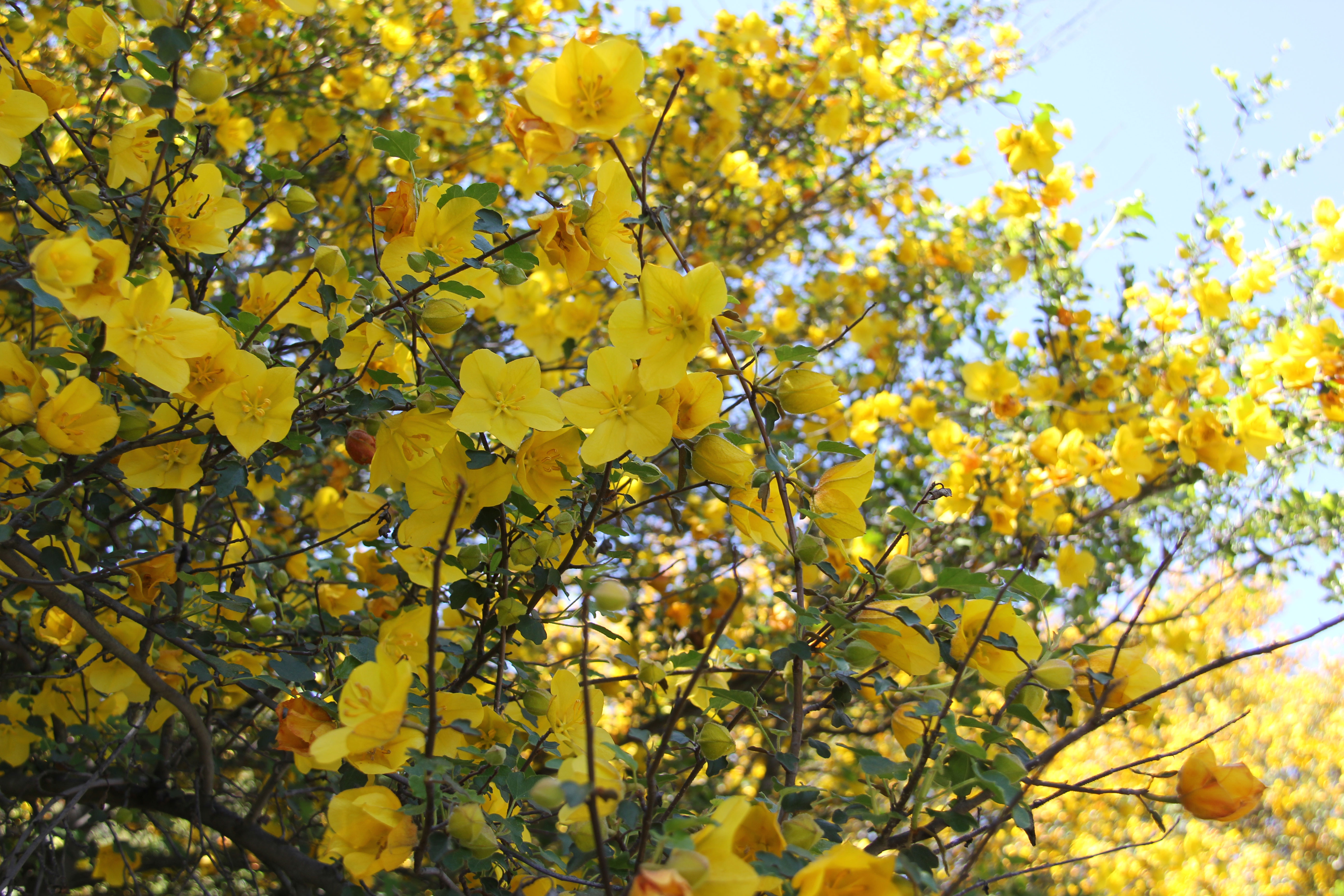
 Petals shower the pathways in Ravenna, where spring is ON.
February 20th, 2010
 The spirit of the wolf lives on in every dog.
Beasts: how we love them. Love to fear them. Love to hate them. Love to hunt them. Love to tell tales about them.
Since before the dawn of printed words, stories of wild animals whose actions blur the line between species have fascinated humans. To talk to the animals, to know what they think and feel, remains a subject of vivid interest. And of all animals, dogs have shown the greatest ability, and desire, to bond with humans, to serve, follow, and work for them. But . . . inside every dog, from the tiniest Chihuahua to the burliest mastiff, lurks genetic memory code of its ancestry — the wolf. Not exactly man’s best friend.
 Wild inside.
The romance of this idea has been exploited for centuries. And while modern teenagers may think, judging by some of the gushing postings on the web, that werewolves were reinvented solely by the author of the “Twilight” series, the truth is more complicated. The concept of the man/wolf, or the beast within us all, has been the subject and/or inspiration of many imaginative works, both literary and cinematic. When the “Twilight” generation were still wearing Pampers, Jack Nicholson astounded audiences in 1994 with his riveting portrayal in “Wolf.” One of the things that made Nicholson’s performance so impressive was that his convincing transformation from man to wolf was produced without the aid of digital enhancements or fake fur. It was all in the eyes, the attitude, the snarl.
Last week Benicio Del Toro joined the ranks of fine actors who have taken a walk on the wolf side in the new film, “The Wolfman.” It’s a grittier rendition than, say, Hugh Jackman’s pimped-out Wolverine character in the X-Men movies. But that’s part of what makes the genre entertaining. In literature and film, you really can teach a dog new tricks.
In Toby Barlow’s brilliant 2007 debut novel “Sharp Teeth” the myth of the lycanthrope is given a terrific noir spin. Set in modern LA, with a cast of characters that include a down on his luck dogcatcher, some female werewolves with sharp teeth of their own, and some competitive bridge players with more than cards up their sleeves, the story deals with issues of loyalty, justice, compassion and community without ever slipping into sentimentality. And, did I mention the entire thing is written in blank verse? I know. I wasn’t sure I was going to be able to hack it. But the clarity and occasional poetic power of the language, the nimble pace, and the fine-edged tone of the whole is such that you forget about the form and get swept away by the wonder of a good story well told.
Allen Ginsberg would have loved it.
February 13th, 2010
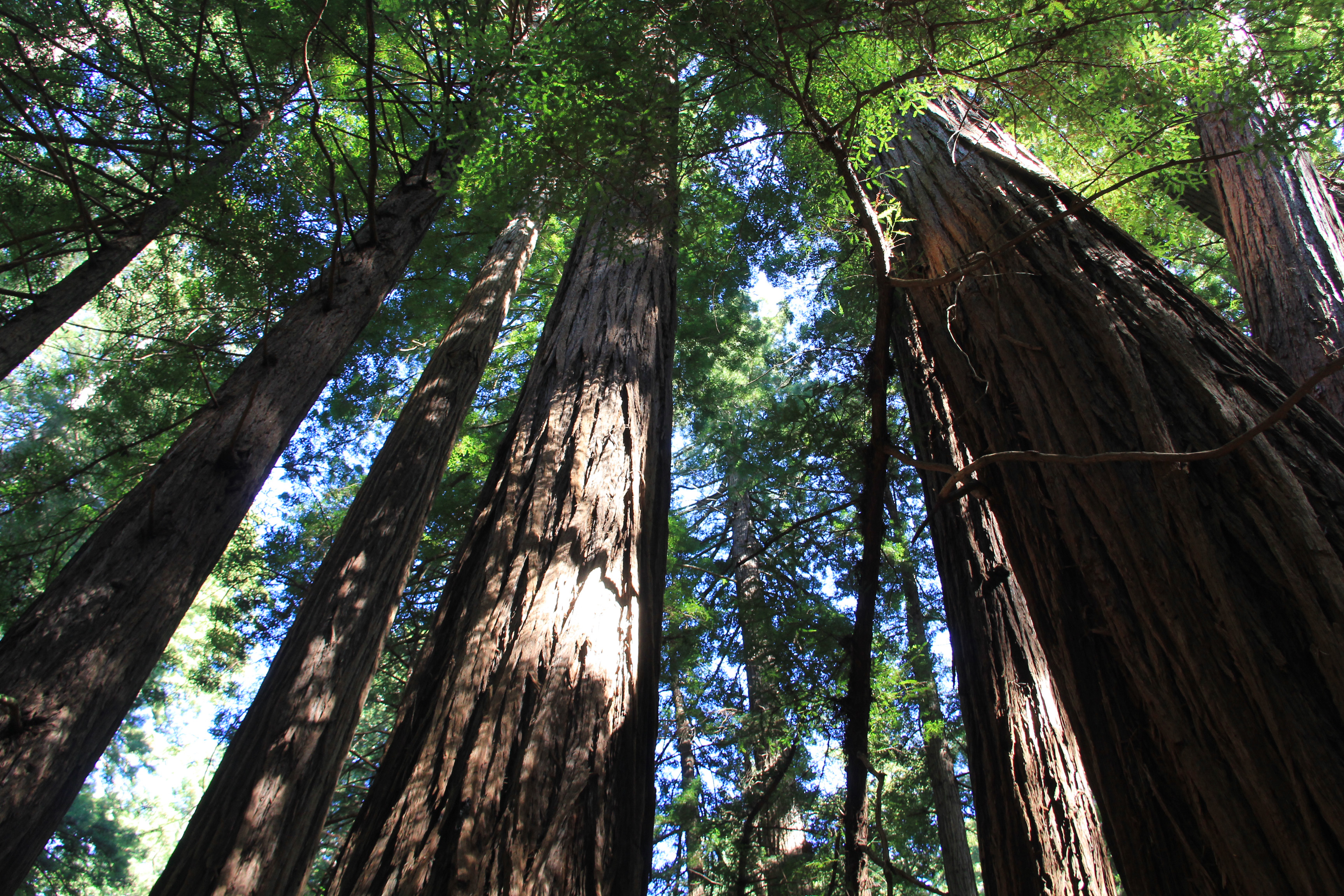
 Tree worshiping Druids would feel right at home in the Hoh Rainforest of Olympics National Park.
I talked to some relatives back East yesterday. They were chipping ice off the driveway, having icicle measuring contests (the unofficial winner: eight feet long), and trying to keep the kids from snowboarding off the roof.
I did my best not to gloat. I didn’t tell them about the camellias blooming at my doorstep. Or the primroses lighting up gardens all over town. Or the fact that Seattle just went in the record books for the warmest January in more than a hundred years.
I feel that Seattle has earned the respite. The first year we moved here the city was slogging through a stretch of record rain that made national news (forty days-plus without the ark). The next winter a series of windstorms, ice events and floods started me wondering if we’d been sold a bill of goods by the folks who had assured us Seattle’s winters were uniformly mild. The third winter a foot of snow paralyzed the city for more than a week. People were stranded at Sea-Tac for days at Christmas. And of course the city doesn’t keep a fleet of snowplows handy because, I guess, they bought into the same myth of the mild winter.
So this year, I was braced for whatever - earthquake, mudslide, volcano eruption. But it seems this was the payoff year. Gentle temperatures. Daily sunbreaks. Sometimes whole sunny days! It’s been pretty great.
I feel for my friends back east. It’s never fun to be snowed in after the novelty wears off and the electricity and heat go off as well. I know from personal experience that shoveling driveways builds character. But once that character is built, it can be a bit of a trial to have to keep rebuilding it every time the clouds roll in and dump another foot or two of snow.
Here in Seattle the average annual rainfall is 37 inches. That’s less than Virginia’s average of 45 inches, or Florida’s average of 54 inches. What makes Seattle different is that instead of summer thundershowers which dump an inch or two at a time, Seattle gets a steady, drizzling mist over an eight month period from October to May. It takes some getting used to. But considering some of the alternatives, there’s a lot to be said for gentle rain.
In “The Good Rain,” Timothy Egan’s remarkable history of the Pacific Northwest, he credits the unusual climate of this region for shaping its history. In modern times we like to think we are immune to climate. Insulated by air conditioning, heating, and increasingly elaborate water management techniques, we act as if we no longer need to consider the realities of geography. And this recent spate of blizzards has all the climate change skeptics fired up anew, claiming a few days of record snowfall is sufficient to overturn decades of slow and careful scientific data gathered worldwide.
Our human perspective is so limited. Many centuries ago, ancient cultures thought weather gods could be appeased by sacrifices. In our own time, the force of hurricanes, snowstorms and typhoons appears to be escalating. Whether or not global warming is responsible for the planet’s wild mood swings, it looks like we could be in for a rough ride in the coming centuries.
But if I have to choose between a snow shovel and an umbrella, I’ll take the umbrella.
February 6th, 2010
I have succumbed to “Caprica.”
I didn’t even put up a fight. As a former fan of “Battlestar Galatica,” the smashing Sci-Fi Channel series which set pulses racing with its taiko drums and noir attitude, I didn’t stumble unwittingly upon “Caprica.” I saw the slick ads in The New Yorker. I allowed myself to hope that the show might measure up.
And, so far, it’s not bad. The writers have a lot of compelling themes to work with – the uneasy alliance between artificial intelligence and humanity, the contested zone between religion and science, the limits of love and friendship in a world gone mad. The show is stylish, layered, and occasionally has the foreshadowing of those addictive drums.
But last night for the first time I heard one of the characters use the word “frack” as a verb to suggest—well, what we all assumed it meant in BG—a word that can’t be uttered on major networks. And it sounded natural in the fictional context. However, my own understanding of the word has irrevocably changed since I came across a story on the news wires earlier this week. The story by Associated Press Writers Marc Levy and Vicki Smith dealt with a drilling technique that has been used since the 1990s to tap natural gas fields.
The technique is called hydraulic fracturing, or “fracking.” And all this time I had thought how clever the writers of Battlestar had been to get around the confinement of obscenity rules by inventing a brand new euphemism which had the virtues of being both explosive on the tongue and somehow suggestively smutty. Yet, it turns out, the drilling technique, which involves pumping millions of gallons of water, sand and chemicals into wells to fracture the shale where the gas is trapped, produces a salty, foul wastewater too loaded with chemicals to be restored by conventional sewage and drinking water treatment plants. Hmm. Maybe the term is more obscene than I thought.
Of course, we all want energy to run our TVs and video games, not to mention the robots who will be doing our dirty work in the glorious future. But if our energy experts don’t figure out a better way to manage the millions of gallons of polluted water that fracking leaves behind, at some point in the not too distant future we may find ourselves well and truly fracked.
January 31st, 2010
 The neon spell of the siren of 45th Street lights the darkest nights.
January 24th, 2010
Ever since he demonstrated an uncanny ability to portray the almost pathological obsessiveness of a certain type of male music fan in his novel “High Fidelity,” British author Nick Hornby has gone on to broaden the scope of his acute observation to include the frailties of marriage, the perilous borderland between childhood and young adulthood, and the bewildering moral minefield of the modern world.
In his latest novel, “Juliet, Naked,” Hornby weaves all of these themes into a compelling and immensely entertaining examination of a man’s obsessive interest in a reclusive rock musician, and how it unravels his life and marriage. Hornby’s portrait of Duncan calls to mind the almost painful excesses of devotion which the author revealed in “Fever Pitch,” his confessional memoir which detailed his lifelong love of football – the British version, what we in America call soccer. Hornby’s ability to empathize with characters who, for whatever reason, find their deepest connection to life through a kind of hero worship, allows him to make believable characters with whom the reader can sympathize.
“Juliet, Naked” exposes the kind of music fans who over-analyze every word and every recording of their idols, and the Internet-based communities who thrive on their own closed-circuit opinions. Hornby’s satisfying plot device takes off when Duncan’s long-time girlfriend Annie dares to post an opinion of her own on the website where he is considered to be the expert. The chain of events which follows sheds light on Duncan’s failure as an adult, and awakens Annie to the reality of the half-life she’s been willing to accept.
I have enjoyed all of Hornby’s novels. “About A Boy” – far superior to the film, and I liked the film a lot – “How to Be Good,” as thought-provoking as anything he’s done, and even “High Fidelity,” which is perhaps not as much fun as the movie with John Cusack (thanks in part to one of Jack Black’s finest moments), but nevertheless offers an astute assessment of the sort of man who ranks everything from songs to women in terms of “the top five.”
Anyway. If you are of a certain age you can’t help but relate to the story in “Juliet, Naked.” Many of us who grew up worshiping rock stars, imagining them as true artists with the ability to give voice to feelings we shared, have felt the letdown when those artists either lost their creative spark or revealed themselves to be only human.
But Hornby’s novel suggests that the value of great art lies not only in the passion with which it is created, but the passion with which it is experienced. And in that sense, “Juliet, Naked” offers a tonic antidote to idolatry.
January 17th, 2010
I keep thinking about the Tsunami of 2004.
More than two hundred thousand people, most of them women and children, were killed in a matter of moments on December 26 that year, when a 9.3 magnitude earthquake off the coast of Indonesia triggered a massive killer wave.
It was all over the news for perhaps a month. And then it slipped into the past, for most of the world. In Indonesia the effects of the tragedy and the recovery efforts are still going on.
Now in Haiti, where at least one hundred thousand people have been killed by a powerful 7.0 earthquake, the vivid images of death and destruction are overwhelming. The urge to offer help is universal. Unlike the tsunami victims, most of whom were swept away, the dead lie in the streets of Haiti, where lack of infrastructure and resources is slowing even the most heroic efforts to bring relief and aid. The images of the dead and suffering survivors in Haiti are perhaps more dramatic than the photos of empty beaches of Indonesia. But once the rubble is cleared and the bodies are buried, I suspect even this horrific event will slip down in the news cycle.
It’s too much to take. Everyone does what they can. But if that’s not enough, what then?
Events on such a huge scale can lead to a feeling of powerlessness. And unfortunately the urge to blame rides shotgun in the rescue effort. But there’s no sense in blaming the victims, or religion, or the lack of it, for natural disasters.
All we can do is what the people in Indonesia, and New Orleans, and everywhere tragedy redefines the human landscape, must do. Pick up the pieces, help each other as best we can, and go on.
It doesn’t sound very heroic. But in real life, as in fiction, sometimes the only way to survive is to turn the page.
January 9th, 2010
The Simpsons celebrates twenty seasons of satirical splendor tomorrow.
I’ll be tuned in.
Yet when it all started, more than twenty years ago, I had no time for television. I was working thirty hours a week at a newspaper in addition to taking college courses and raising three kids. Spare time was a fantasy.
Even so, The Simpsons seeped into my consciousness, in part because the half hour during which the show aired once a week was one of the only times my three children and their father would sit down and watch something together. The sound of them all laughing would float up the stairwell to the kitchen where I was cooking dinner. And that was good enough for me.
The Simpsons lexicon — Homer’s “d’oh!,” Nelson’s “hah, hah,” Flanders’ “okely dokely”, etc., crept into daily conversation. I knew what they looked like. I had a vague sense of the show’s skewed humor. But seriously, I had no idea how truly cool The Simpsons were until I got hooked on the reruns.
This was long after my kids had left home and gone out into the world to forge their own paths. That’s when the house got quiet. Too quiet. So, one evening, I turned on the tube and after flipping through the channels in vain for a few minutes I settled on The Simpsons. What the hell, I figured. My son had always urged me to give them a try. My daughters assured me I would like them.
How right they were. It didn’t take long for me to identify with Marge, to feel for Lisa, to forgive Bart for all his mistakes, and to love Homer in spite of his many flaws, because his heart is true. I make no mention of Maggie because, let’s face it, she’s an adorable baby; there’s no getting around it.
When I grew up, kids were expected to like cartoons. Saturday mornings were prime time. And the cartoons were lousy. No doubt there are people somewhere who thrilled to the antics of Tom and Jerry, Bugs Bunny and the Roadrunner. But I never saw the point of repeated gags about violence, greed and petty cruelty. The Simpsons’ “Itchy and Scratchy” segments are hard for me to watch only because they remind me of the inane antics that were provided as appropriate childrens’ fare in the late fifties.
The advent of more sophisticated shows like “Rocky and Bullwinkle” heralded a change in the culture, but there has never been anything like The Simpsons. In its ability to both mirror and mock the world in which we live, to inspire emotional connection without being sappy, and to provide insightful commentary on current issues, The Simpsons stands alone.
Here in Seattle, many locals point to the episode in which Springfield votes to build a monorail to boost its economy as an example of telling cultural criticism.
I’d be hard-pressed to pick a favorite episode. I’m not even sure if I’ve seen them all yet. But I think one of the Top Ten for me would have to be the episode titled “That 90s Show,” in which Homer starts a grunge band called Sadgasm after he thinks he’s lost Marge to a college professor.
I’m sure there will be college courses on The Simpsons in the future, if there aren’t already, and theses may be written on such tormented characters as Comic Book Guy and Moe the Bartender. But if I were still writing those kind of papers I could write a book about Marge. There’s a world of complexity underneath that blue tower of hair. As Homer put it so well in his timeless song “Margarine”: “Country churned girl in my grocery cart/ I paid for her dreams, she taught me to cry.”
Thank you, Matt Groening.
January 1st, 2010
Forget RinTinTin. Forget Lassie. And weep no more for Marley.
In this bright New Year, my heart belongs to Tillman, the snowboarding, skateboarding, surfboarding bulldog extraordinaire.
I first saw Tillman skimming along on his skateboard a year or so ago in a video clip. Cute, I thought. Little did I know that millions of fellow Americans would share my fondness for the squat, chubby, daredevil pooch.Tillman the Wonder Dog
Seattle is full of dogs and it’s not uncommon here to see dogs going the extra mile to please. Some pull their owners along on skateboards, others accomplish acrobatic feats with Frisbees and whatnot. But I have yet to see any canine equal Tillman for sheer charm and entertainment value. So this morning, when I crawled out of bed with a dull headache to face the New Year, and went down to watch a bit of the annual Tournament of Roses Parade, I was delighted to see Tillman and three of his pals boldly sliding where no dogs have slid before, down a specially constructed record-breaking long float.
Man. I don’t know what it is about that dog. I have never had the slightest desire to snowboard myself, and I tend to feel that skateboarding is best left to those with a lower center of gravity, but watching Tillman in action just makes me smile. Say what you will about Americans being a bit unbalanced when it comes to pets. I don’t care. The modern world is full of peril, problems and petty bickering. Yet if a dog like Tillman can banish gloom, even temporarily, that gives me hope for us all. Perhaps we can’t all move through life with the kind of grace and resilient good cheer that Tillman exudes.
But this year I’m going to give it a try.
|
|